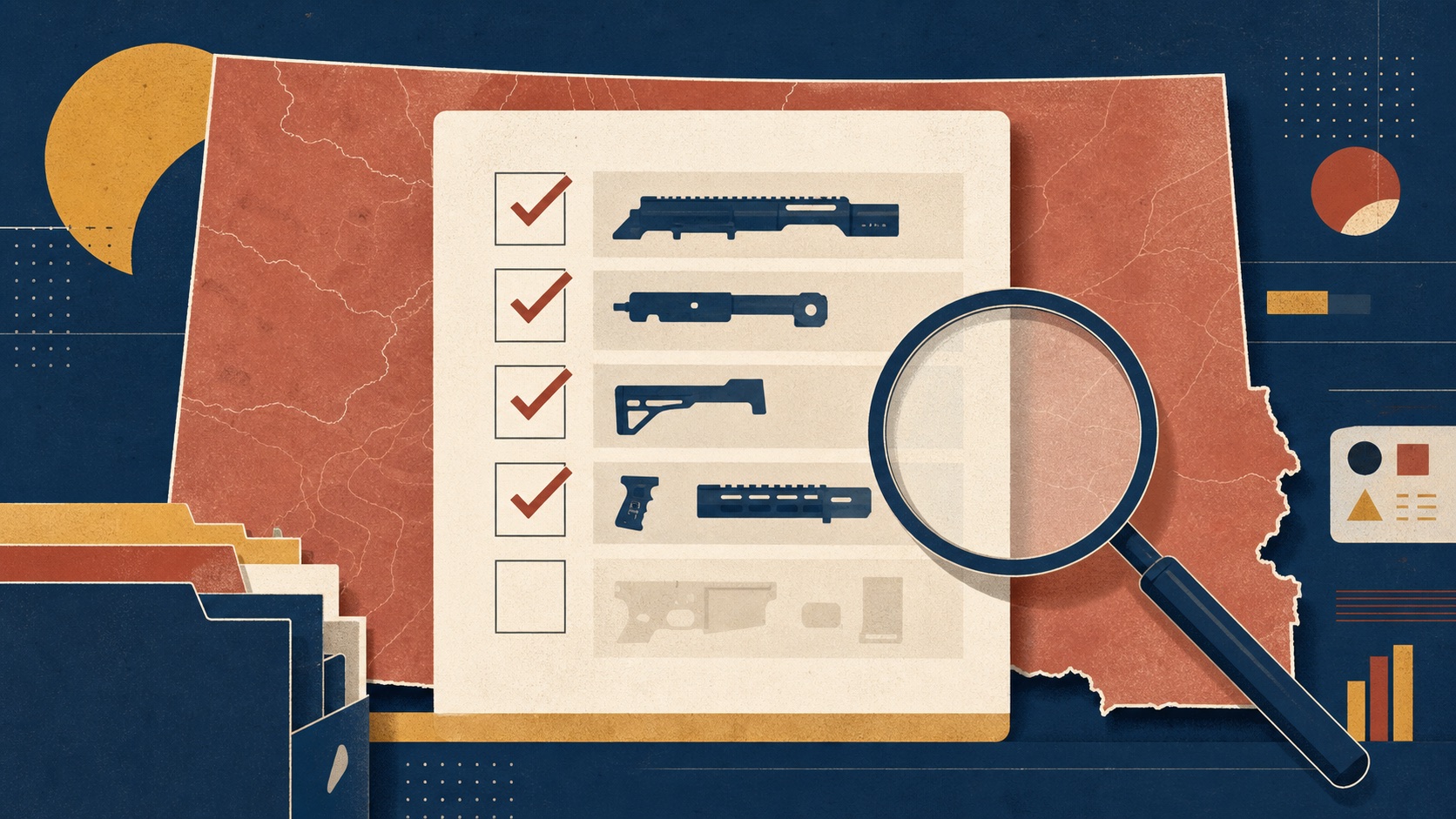

Between the eligibility card, the safety course, and the guidance list, it's easy to come away from all of this thinking every gun purchase in Colorado just got harder. If you're buying a handgun, that's very likely not true.
The one question that decides everything
SB25-003's new requirements only reach a "gas-operated semiautomatic handgun" with a detachable magazine. Everything else about a handgun — caliber, capacity, how scary it looks, whether it has an accessory rail — is irrelevant to this specific law. The only mechanical question that matters is whether the gun cycles by tapping gas from a fired cartridge, or by conventional recoil.
If you're buying a typical service or carry pistol
A Glock, a Smith & Wesson M&P, a Sig P320 or P365, a CZ, most 1911s, a Walther, a Springfield Hellcat — all of these are short-recoil operated. The barrel and slide stay locked together briefly after firing, then unlock and separate so the slide can cycle. No gas system is involved. These pistols fall squarely under the statute's recoil-operated exception, regardless of magazine capacity, caliber, or how many of them you buy. Buying one of these on or after August 1, 2026 looks exactly like buying one does today: background check, three-day waiting period, standard paperwork, no eligibility card, no safety course.
If you're buying a revolver
Not covered at all, for a different reason — a revolver isn't a "semiautomatic firearm" under the statute's definition in the first place. We cover why in Revolvers Aren't Even Part of This Conversation, but the short version is that revolvers don't use the fired cartridge's energy to cycle themselves the way a semiautomatic does, so the whole SSF framework never applies.
If you're buying an AR-pattern or AK-pattern pistol
This is where the new process actually applies. These pistols cycle by gas, not recoil, the same as their rifle counterparts, just in pistol-length form. If it has a detachable magazine — and nearly all of them do — it's a specified semiautomatic firearm, and you'll need the eligibility card and completed safety course before an FFL can transfer it to you after August 1.
One genuine exception worth knowing about
A small number of conventional-looking handguns are actually gas-operated — the Desert Eagle is the best-known example. We go into that specific case in The Desert Eagle Problem, because it's the kind of gun that surprises people.
A quick gut check before you buy
Ask yourself one question: does this pistol have a visible gas system — a gas port on the barrel, a piston, anything resembling what an AR or AK uses to cycle? If no, and it's not a revolver, you're almost certainly looking at a normal transaction. If yes, budget the extra time for the eligibility card and course before you plan on walking out with it.
One more thing that hasn't changed
A Colorado CCW or CHP permit does not substitute for the eligibility card or safety course if the handgun you're buying does turn out to be gas-operated. Experienced concealed carriers aren't exempt from this process — but again, that only matters if you're buying the narrow category of handgun this law actually targets.
As always, we are not lawyers — just Colorado citizens trying to understand the new law and share what we learn. The information on this website is for general informational purposes only and does not constitute legal advice, nor does it create an attorney/client relationship. The accuracy, completeness, or currency of the content is not warranted. Your use of content on this website is at your own risk. Consult an attorney about your specific circumstances.