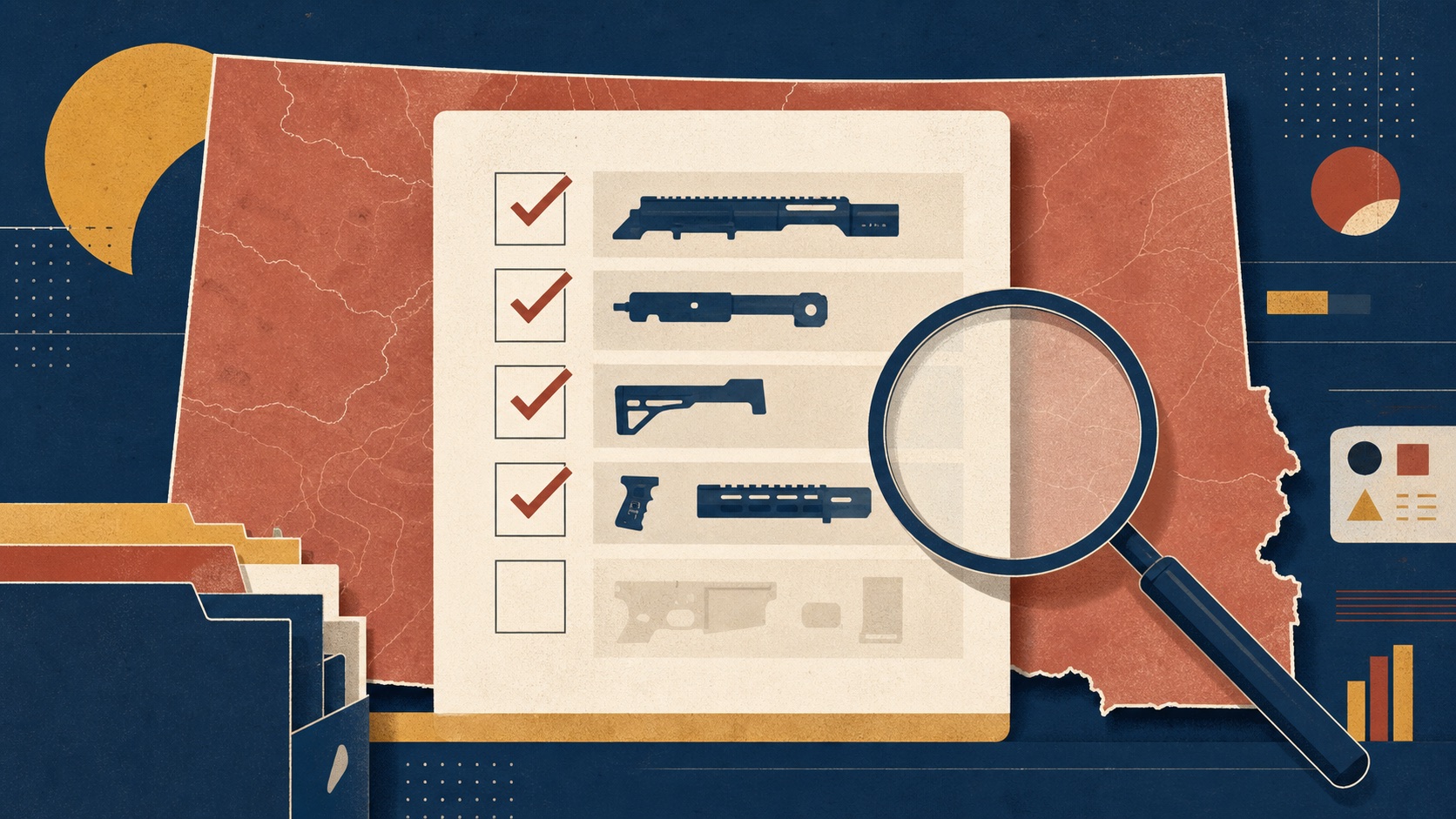
Building a rifle from an unfinished ("80%") receiver has been a legal, if regulated, hobby in Colorado for years — subject to the state's existing unserialized-firearm law (C.R.S. 18-12-111.5), which already requires background-check and serialization steps around home builds. SB25-003 adds a separate, and in our read, more serious wrinkle on top of that for anyone building something that qualifies as an SSF.
The relevant text
C.R.S. 18-12-116(2) says: "On or after August 1, 2026, it is unlawful for any person to knowingly manufacture, distribute, transfer, sell, or purchase a specified semiautomatic firearm," subject only to the exceptions listed in subsection (3).
Here's the wrinkle we noticed: manufacture and purchase aren't written the same way
Going through subsection (3) exception by exception: the carve-outs that mention "manufacture" all involve manufacturing an SSF for an institutional buyer — a law enforcement agency, the Department of Corrections, an armored-vehicle business, or as a blank-firing film prop. The exception that lets ordinary private citizens keep buying SSFs — the one requiring the eligibility card and the safety course — is written narrowly as "the transfer or sale of a specified semiautomatic firearm to, and receipt or purchase of a specified semiautomatic firearm by" a qualifying individual. On a literal read, that clause covers buying a complete SSF, not building one yourself.
Read completely literally, that raises a real question: does the statute leave a private citizen any lawful way to manufacture their own SSF — including finishing an 80% lower into one — after August 1, 2026, even with a valid eligibility card and completed course? We want to be upfront that this is our own close reading of the text, not something we've seen stated anywhere else. We specifically went looking for other coverage of this exact question — builder-focused retailers, gun-law explainer sites, anything — and didn't find a single other source that raises it. That absence cuts both ways: it might mean we've spotted something real that hasn't gotten attention yet, or it might mean we're reading "manufacture" more narrowly than it's meant to be read.
The competing interpretation we didn't give enough weight to at first
Under federal law, "manufacturing" a firearm has long been treated as a specific, licensed commercial activity, distinct from an individual assembling a gun for their own personal use — that distinction is the entire reason home-building from an 80% receiver has been legal without a manufacturer's license in the first place. Colorado's own existing unserialized-firearm statute (18-12-111.5) already treats individual home builds as their own regulated category, separate from commercial manufacture. It's entirely plausible that 18-12-116(2)'s "manufacture" prohibition is meant to track that same distinction — aimed at commercial production of SSFs for sale, not an individual finishing a receiver for personal use — in which case completing your own build might not trigger this section at all, course or no course.
We genuinely don't know which of these two readings is correct, and we haven't found a court decision, a formal Statement of Position from the Firearms Dealer Division, or any secondary source that resolves it either way.
What this means in practice
If you have an in-progress 80% build, finishing it before August 1, 2026 sidesteps the question entirely — that's the one move that's unambiguously safe under any reading. If you're weighing whether to start or finish a build after that date, this is exactly the kind of open question worth resolving through the state's formal declaratory-order process (see our companion post, How to Challenge Whether Your Firearm Is Really an SSF) or a conversation with a Colorado firearms attorney, rather than relying on our read of the statute — or anyone else's — as settled law.
As always, we are not lawyers — just Colorado citizens trying to understand the new law and share what we learn. The information on this website is for general informational purposes only and does not constitute legal advice, nor does it create an attorney/client relationship. The accuracy, completeness, or currency of the content is not warranted. Your use of content on this website is at your own risk. Consult an attorney about your specific circumstances.